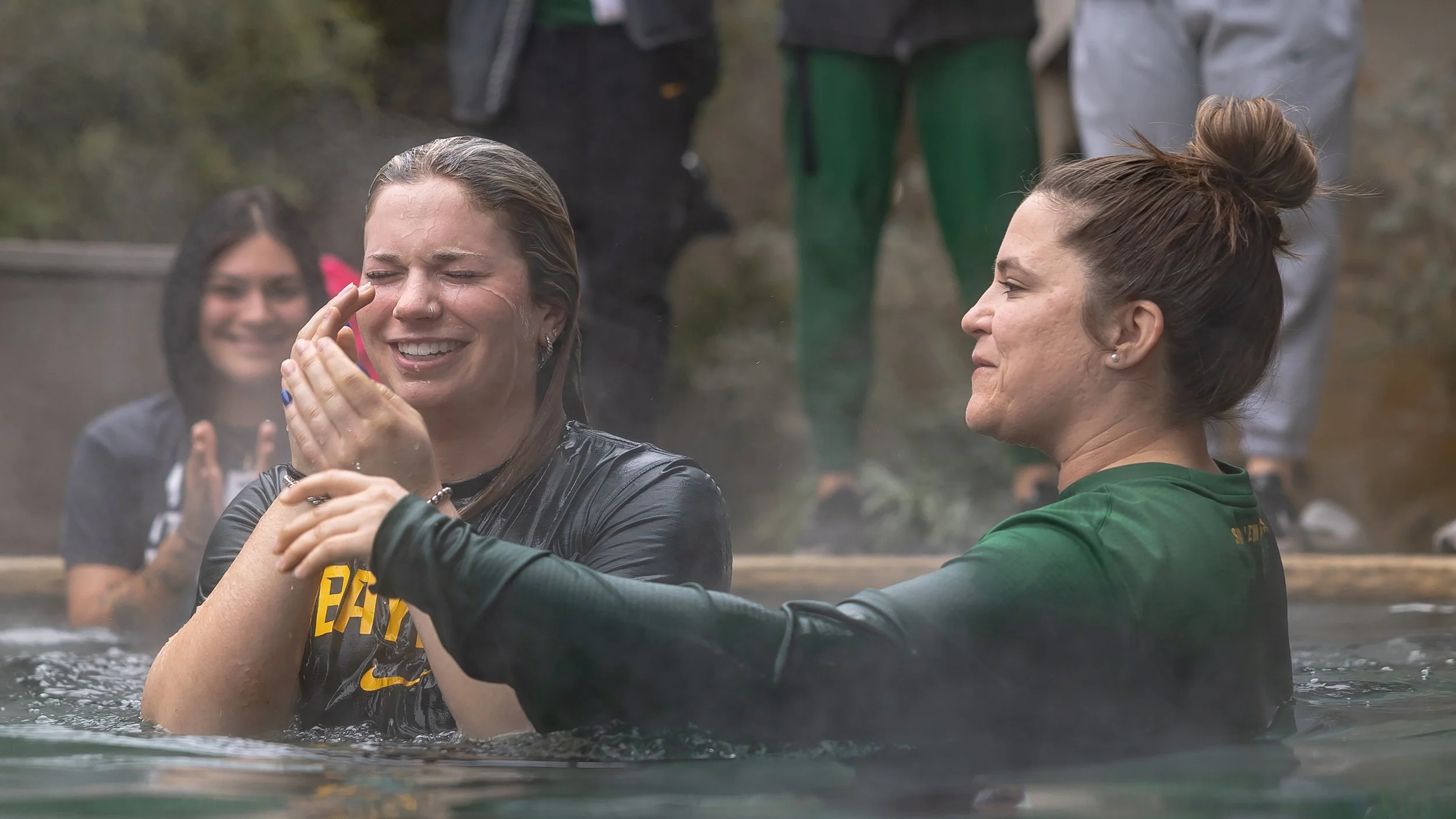
Religion in Sports
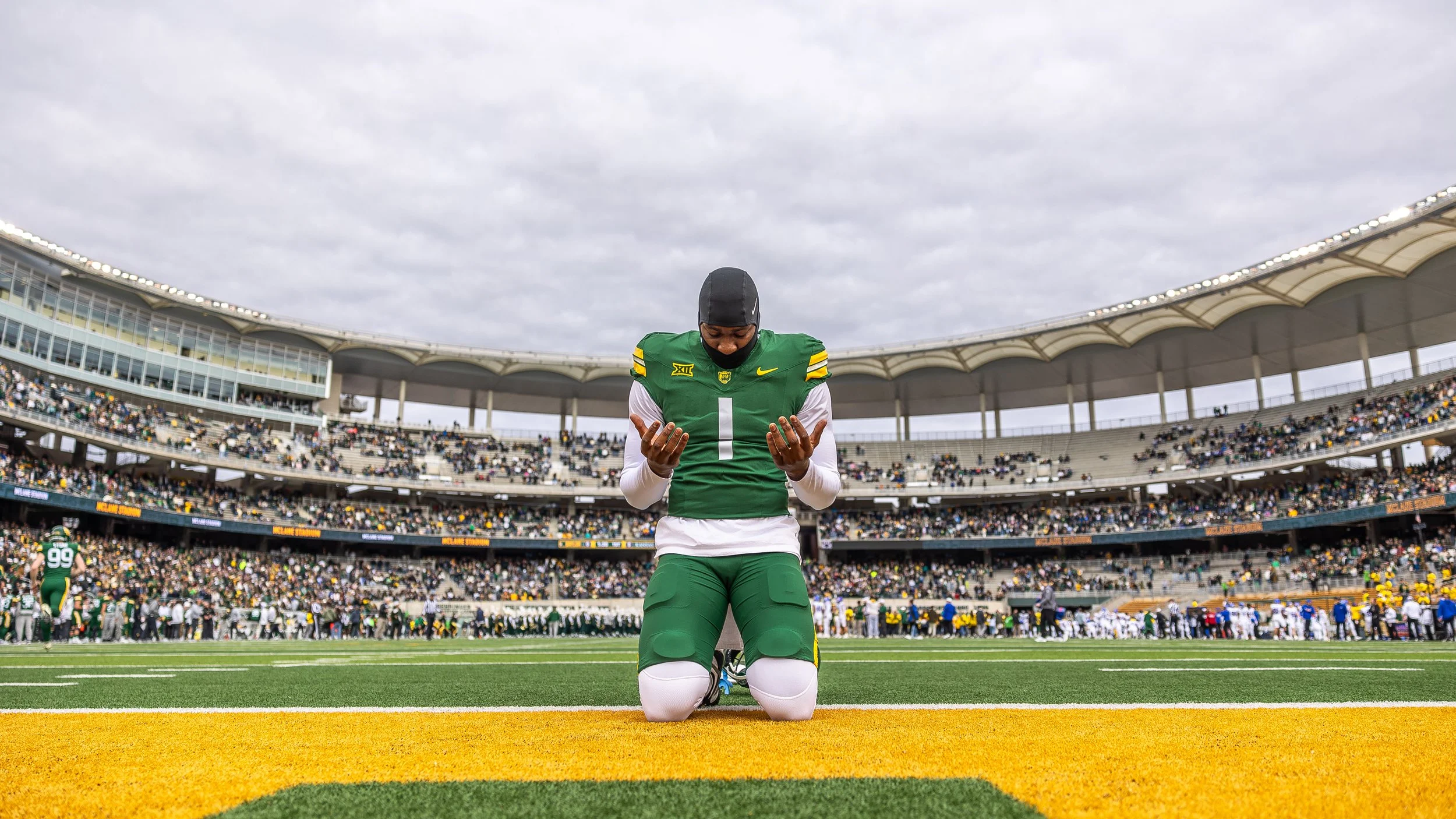
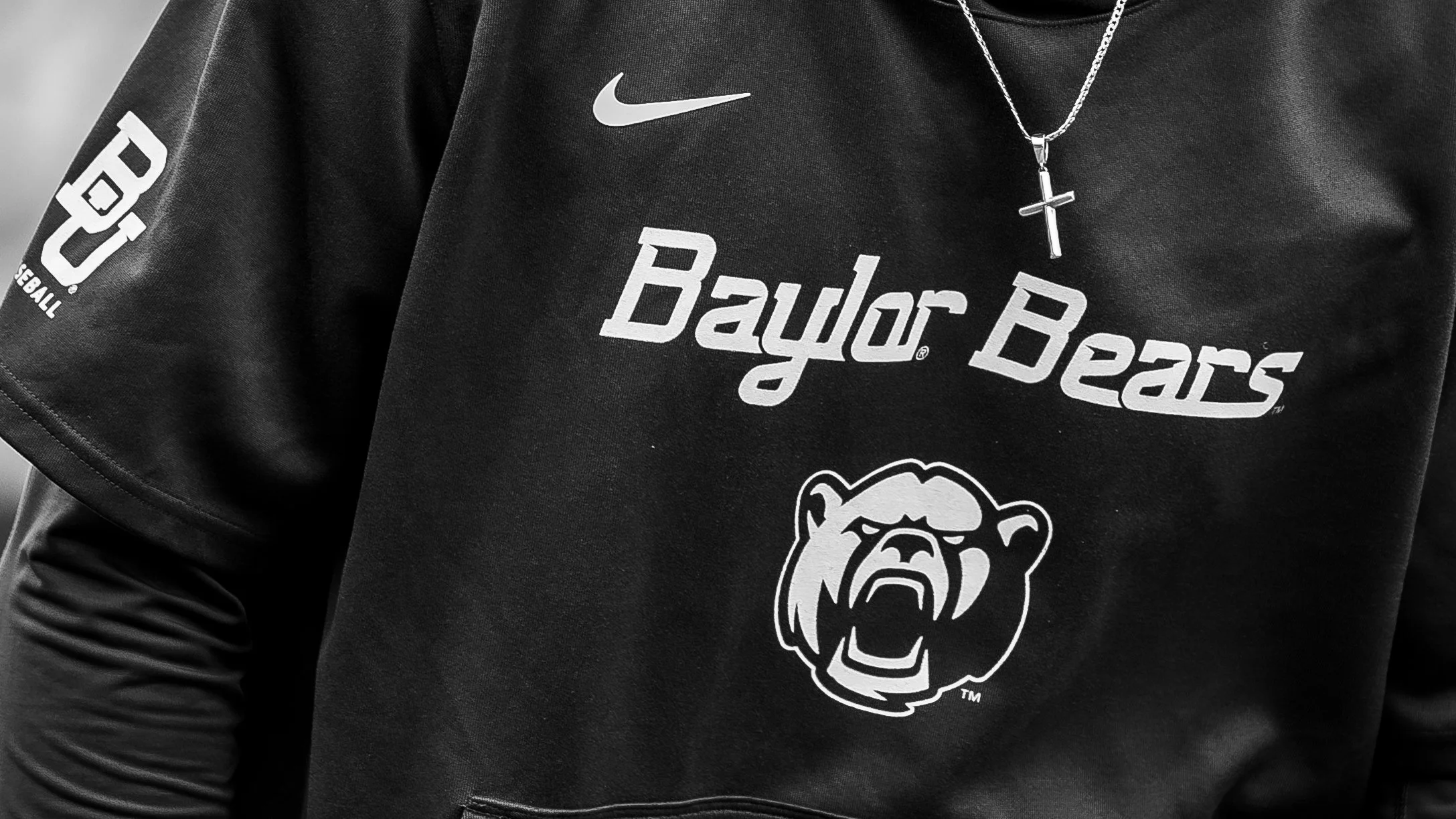
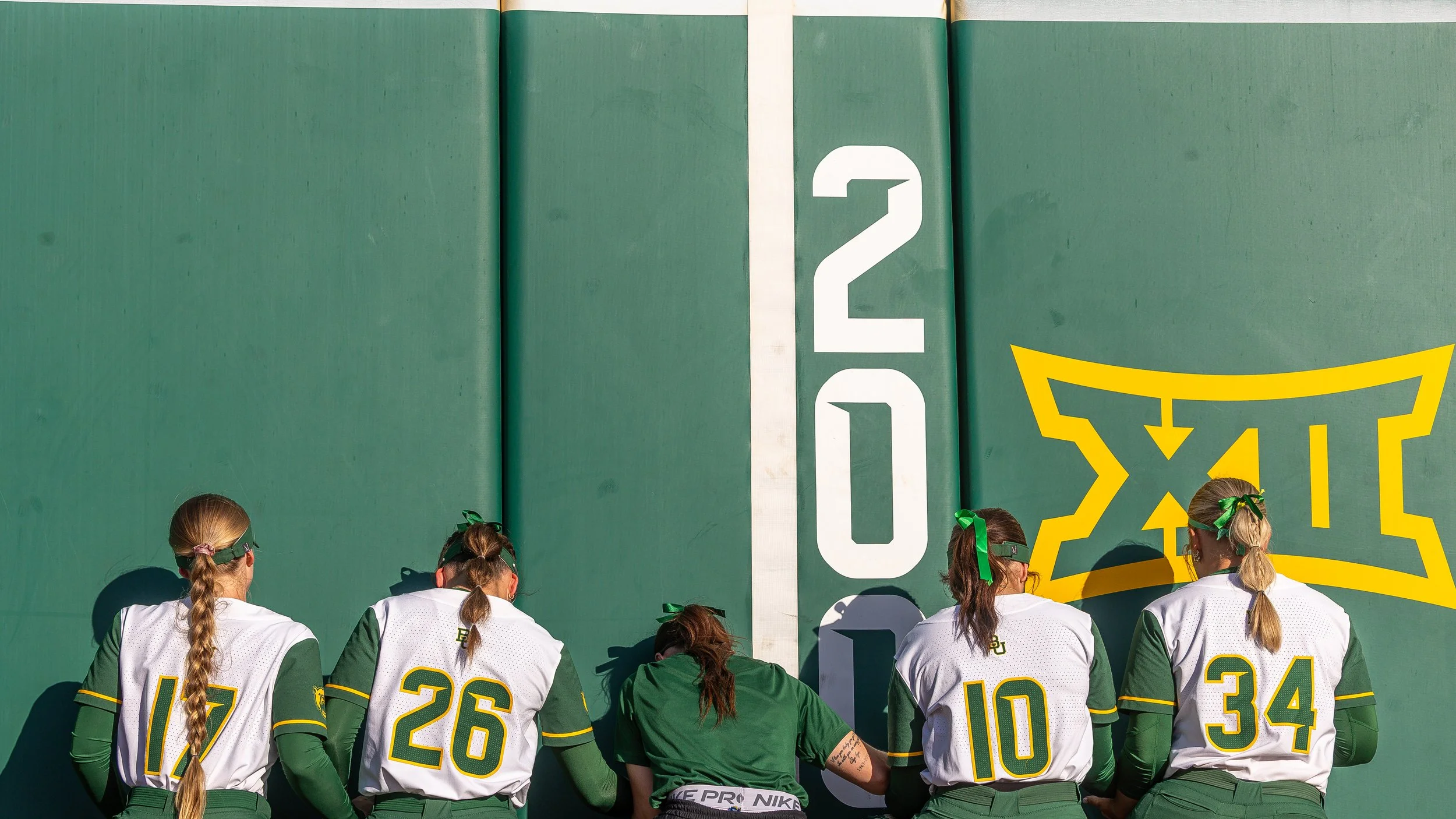
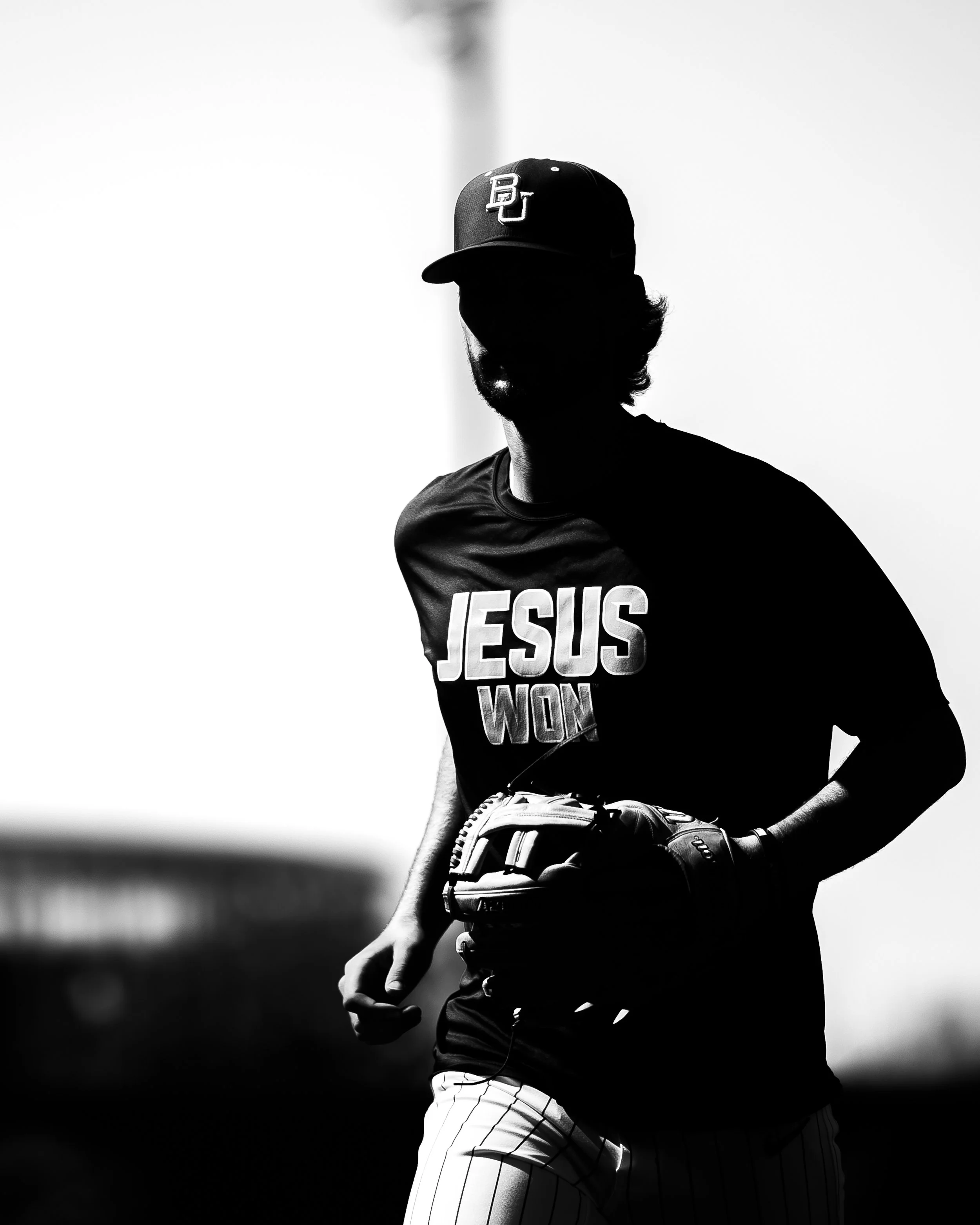
During the 2025 Spring semester, I found myself noticing the importance of faith in the world of athletics. Being a photographer myself, I put together the small photo essay “Gods Moving on the Diamond,” which highlighted religion in Baylor’s baseball and softball programs.
I extended this interest into my research topic for my Law and Ethics class in the Baylor Journalism department. The eight page breakdown of my findings can be seen below, followed by a few photos of athletes praying.
Faith in Sports
Faith is a staple for many throughout their athletic careers, especially in times of distress. This can come in many forms like silent prayer alone or openly exclaiming their love for the Lord on the field. No matter the shape it takes, it is a cornerstone of many athletes and organizations. However, there are people who believe this should not be a part of sports or public life and openly criticize public devotion. Hence, creating a controversy due to scrutiny over open displays of religious beliefs. Faith should always be accepted within the sports world because religion is important to many athletes, many credit their successes to the Lord, and open displays of prayer are widely used in a time of need to aid an individual.
To start off, religious athletes come from many different religious backgrounds and play a variety of different sports. A prominent example of a religious athlete is Hakeem Olajuwan, a devout, practicing Muslim during his time in the NBA and beyond. The importance of faith in Hakeem’s life is highlighted in Anthony Rucho’s article “NBA LINE: Olajuwan's Sacrifices,” which discusses current events happening in the NBA, spotlighting Hakeem’s Ramadan fasting. To deal with the demands of an NBA game, Hakeem eats breakfast before the sun comes up and even skips the morning practice to “conserve his energy” for that day's game (Rucho, para 2). Hakeem’s religious beliefs are so important to him, that his career is put on the backburner for a month each year. He was in the spotlight and even praised for playing through Ramadan. He is far from the first to have strong religious beliefs tied into their sport, and certainly was not the last. However, most athletes are not treated so kindly when combining their religion with athletics.
Now, moving into more recent memory within the football world. Christianity is a huge part of Tim Tebow’s life, and he should not receive ridicule for his faithful beliefs. Greg Bishop, of the New York Times, covered Tim Tebow in, “In Tebow Debate, a Clash of Faith and Football,” in the 2011 NFL season. While discussing Tebow’s religious beliefs, and their relation to his football career, he is described as “a champion of Christianity in shoulder pads” (Bishop, para 5). Life was never just about the game of football for Tim Tebow. Although Tebow found football important, Tebow prioritized his relationship with God, and being a champion of God’s will. However, he was not praised for bringing his beliefs onto the field. Rather, this created controversy around him, but it should be no different than Hakeem or any other religious athlete. Nonetheless, Tebow is a rather extreme example of Christianity in football.
Finally, there are many in the football world whose faith is a big part of their life, but some follow it without question. This should be widely accepted, as they believe God has a plan for everyone. Mark Viera, of the New York Times, covered Baylor’s Robert Griffin III’s Heisman win in “Baylor's Griffin Wins Heisman,” in December of 2011. Griffin, who was overlooked by many out of high school, was told he would become an elite talent at Baylor and Griffin says, “you just have to have blind faith,” at the Heisman Ceremony (qtd. in Viera, para 2). Although this trust seems to just be in Baylor football, it runs much deeper than that. He put his faith in God and trusted the path that was laid out for him, illustrating how important faith is to Griffin. However, his beliefs are widely accepted by fans because the media did not scrutinize him for believing in God’s plan for him. This is how it should be for every athlete’s religious beliefs.
To summarize, religion plays a huge role in many athletes' lives, whether they are putting their career in the backseat, like Hakeem or just praising God every chance they get, like Tebow or Griffin. Their faith should not be looked down upon, no matter their religion, or the success they are finding within their respective sports. However, no matter how big faith is in an athlete's life, many will still credit God for their successes with no backlash at all.
To begin, people of faith believe God plays a role in all aspects of their lives, no matter how big or small, the moment may be. This is often seen with athletes crediting God, and they should have every right to do so. Jason Kelly of U.S. Catholic writes “Keep God out of the big leagues,” which is ultimately about why God should be left out of sporting events. However, it gives many examples of athletes giving credit to God with no backlash from the media or fans. A prominent example of this is Sammy Sosa of the Chicago Cubs, who “crosses himself,” praying for a successful trip to the plate (Kelly, para 1). Cubs’ fans and MLB fans alike do not find issue with this expression of prayer. It is subtle but noticeable, and should be allowed for any player, no matter their religious background or their recent performances. However, not everyone is so subtle with their credits to the Lord.
Next, moving back to the previously mentioned Tim Tebow, who was very loud in his praise to God. But this should not make his actions any different than others doing it more quietly. Tebow’s praise is outlined by Michael Butterworth's “The Passion of the Tebow: Sports Media and Heroic Language in the Tragic Frame,” as he explains exactly why it is different for Tebow than other athletes. As Tebow credits both his good and bad days to the Lord, he receives “intense” feedback from fans around the sporting world, which can be traced back to the way he is portrayed by the media (qtd. in Butterworth 18). The problem is not Tebow’s beliefs or his strong, public displays, rather the problem arises in crediting God at all times. Therefore, if Tebow was succeeding on the field, his faith would not be an issue. Success on the field should not dictate how faithful beliefs are viewed by fans. However, sadly, this non-issue can be seen for many athletes who only bring up their faith during times of success.
Now, re-entering the world of baseball, Aaron Judge time and time again is calm and collected in moments he could be going crazy. In “Aaron Judge Credits God, His Christian Faith, and His Adoptive Parents after Breaking Seemingly Unbreakable Homerun Record,” Nathan Skates covers Judge’s unbelievable cap to a season. As he hit his record breaking 62nd homerun, he did not make a huge deal, rather just “raises his eyes up, points to the sky, and calmly trots around the bases” (Skates, para 9). His collected behavior is rooted in his upbringing, specifically within his Christian beliefs. With all the controversy surrounding this historic homerun, no one was complaining about Judge crediting the Lord. This acceptance is what every athlete deserves when they praise God. However, being accepted by fans mostly involves how the media portrays the act of public devotion. Judge, a face of the MLB, was lucky to not be put down by the media. Nonetheless, it was widely accepted by fans and similar actions should also be acceptable, no matter who the athlete is.
To summarize, throughout the world of sports, it is common for athletes to either ask God for help or thank God for their successes. This can be as simple as Sammy Sosa’s sign of the cross and Aaron Judge looking at the sky, or as open and crazy as Tim Tebow’s countless praises of God. It happens in all sports and in many different ways. On the other hand, not everyone agrees that prayer should be a part of sports at all, rather it should stay a private manner.
Furthermore, some athletes, along with fans believe prayer should not be a part of sports. It is their belief that prayer is a private manner, in which one should not partake in during a public sporting event. In Noora Ronkainen’s “‘Don’t Ever Mix God with Sports’: Christian Religion in Athletes’ Stories of Life Transitions,” she, along with her peers, dug into many athletes and their views on faith in athletics. While looking at Vincent, a 36-year-old practicing Catholic, he revealed his dad always taught him to not “ask God for help on the ice,” as God has bigger worries (Ronkainen 618). Similar thought processes are common among believers and non-believers alike, as they think prayer should be separate from sports. However, this logic is flawed because everyone is important in the eyes of God. The Lord does not simply stop caring about someone because they are out on the field or on the ice. Nonetheless, people tend to turn to the Lord when tragedy strikes.
To begin, Damar Hamlin entered cardiac arrest on the football field, sending the sports world into a panic. This panic eventually led to prayer, surrounded by no conflict. Ruth Graham’s New York Times article, “Prayers for Damar Hamlin Show Bond between Football and Faith,” highlights the booming prayers that took place across the sports world that night and the following days. Players on both the Bills and Bengals bowed their heads in prayer as Hamlin was taken off the field in the ambulance, sparking an “extraordinary display of public piety” across the football world (Graham, para 1 and 2). This was a time where the fact people were praying was not controversial, rather celebrated by all. Prayer spread like wildfire, and it had no signs of stopping. Prayers were coming from all directions, from what seemed like everyone. Even those who believe it should be separate from sports were in on it. This level of support from players and fans should be seen during all displays of faith. However, it was not just coming from players or fans, but it was also coming from organizations.
Next, teams and organizations throughout the league were all in support of Damar Hamlin in the days following his scary incident. This again, did not ruffle the feathers of any fans. What normally ends in a huge argument was getting support far and wide. In the article “NFL: All 32 League Franchises Changed Their Social Media Profile Pictures, Asking for Prayer for Damar Hamlin,” the organizations’ around the NFL are covered. As the football world rallied around Hamlin, every team switched their profile pictures to encourage support for Damar (“NFL: All...”, para 2). As teams were pushing for every fan to keep Damar in their prayers, there was no controversy, there was no one arguing against it. Rather, people from all backgrounds agreed that Damar needed the Lord that night and throughout recovery. Many fans even changed their personal profile to support Hamlin as well. A level of support and acceptance rare to see, but should be around all the time. Furthermore, the prayer Hamlin was receiving that night was not just within the football world, but throughout all athletics.
Moving on to the sports world as a whole, many athletes were expressing that Damar was in their thoughts and prayer. Yet again, this did not cause problems, rather more support was gathered for Hamlin. Many athletes, mostly those in the NFL, can be seen publicly praying for Damar in the article ““NFL, Teams and Athletes Join in Prayers for the Health of Damar Hamlin.” These prayer requests, however, do not stop at the NFL. Donovan Mitchell, of the NBA’s Clevland Cavaliers, “asks for prayers for Hamlin and his family” (qtd. in “NFL, Teams...”, para 3). This was celebrated throughout professional athletics, causing no controversy or disagreements. But, even more importantly, Mitchell just had a historic night on the court, but he was more concerned with Hamlin than himself. The acceptance of prayer by other athletes is great to see and should be around more often. Once again, showing how prayer is not controversial when everyone is behind it.
To summarize, displays of faith are widely accepted and without controversy in times of distress. NFL players, 32 NFL organizations, and players in other professional sporting leagues were all sharing their thoughts and prayers for Damar. Surprisingly, there was no backlash to this, rather it was widely accepted and even celebrated around the United States, even outside of the sports world. Not so surprisingly, it was this way due to being in a state of need and the media being in support too. Cementing the idea prayer should be accepted in sports, instead of causing problems, whether in a time of need or just a regular day.
Finally, in conclusion, public displays of faith should be acceptable within athletics because faith is a big part of many athletes’ lives, athletes already praise the Lord for their successes with no backlash, and open displays of faith are used by many in a time of need to aid an individual. Religion is a big deal to many people, for some it saved their lives and for others it is the reason they found success. Condemning an athlete for praying should no longer be acceptable, as no one truly knows what their backstory is. So, next time a player is being scrutinized for their faith, do not be so quick to hate towards the athlete.
Works Cited
Bishop, Greg. “In Tebow Debate, a Clash of Faith and Football.” The New York Times, The New York Times, 8 Nov. 2011, https://www.nytimes.com/2011/11/08/sports/football/in-tebow-debate-a-clash-of-faith-and-football.html.
Butterworth, Michael. “The Passion of the Tebow: Sports Media and Heroic Language in the Tragic Frame.” Taylor & Francis, 2013, https://baylor.primo.exlibrisgroup.com/discovery/fulldisplay?docid=cdi_proquest_miscellaneous_1319608276&context=PC&vid=01BUL_INST:BAYLOR&lang=en&adaptor=Primo%20Central&tab=Everything§ion=items.
Graham, Ruth. “Prayers for Damar Hamlin Show Bond between Football and Faith.” The New York Times, The New York Times, 5 Jan. 2023, https://www.nytimes.com/2023/01/05/us/damar-hamlin-prayers-football-religion.html.
Kelly, Jason. “Keep God out of the Big Leagues.” Go Gale, U.S. Catholic, 1997, https://baylor.primo.exlibrisgroup.com/discovery/fulldisplay?docid=cdi_proquest_miscellaneous_225367580&context=PC&vid=01BUL_INST:BAYLOR&lang=en&adaptor=Primo%20Central&tab=Everything.
“NFL, Teams and Athletes Join in Prayers for the Health of Damar Hamlin.” ProQuest, Miami: Content Engine LLC, 3 Jan. 2023, https://baylor.primo.exlibrisgroup.com/discovery/fulldisplay?docid=cdi_proquest_wirefeeds_2760913377&context=PC&vid=01BUL_INST:BAYLOR&lang=en&adaptor=Primo%20Central&tab=Everything.
“NFL: All 32 League Franchises Changed Their Social Media Profile Pictures, Asking for Prayer for Damar Hamlin.” ProQuest, Miami: Content Engine LLC, 4 Jan. 2023, https://baylor.primo.exlibrisgroup.com/discovery/fulldisplay?docid=cdi_proquest_wirefeeds_2761359198&context=PC&vid=01BUL_INST:BAYLOR&lang=en&adaptor=Primo%20Central&tab=Everything.
Racho, Anthony. “NBA LINE: Olajuwon's Sacrifices.” Factiva, Manila: The Financial Times Limited, https://baylor.primo.exlibrisgroup.com/discovery/fulldisplay?docid=cdi_proquest_reports_234053076&context=PC&vid=01BUL_INST:BAYLOR&lang=en&adaptor=Primo%20Central.
Ronkainen, Noora, et al. “‘Don’t Ever Mix God with Sports’: Christian Religion in Athletes’ Stories of Life Transitions.” EBSCOhost, Abingdon: Routledge, https://baylor.primo.exlibrisgroup.com/discovery/fulldisplay?docid=cdi_proquest_journals_2381945978&context=PC&vid=01BUL_INST:BAYLOR&lang=en&adaptor=Primo%20Central&tab=Everything.
Skates, Nathan. “Aaron Judge Credits God, His Christian Faith, and His Adoptive Parents after Breaking Seemingly Unbreakable Homerun Record.” Standing for Freedom Center, 11 Oct. 2022, https://www.standingforfreedom.com/2022/10/aaron-judge-credits-god-his-christian-faith-and-his-adoptive-parents-after-breaking-seemingly-unbreakable-homerun-record/.
Viera, Mark. “Baylor's Griffin Wins Heisman.” The New York Times, The New York Times, 11 Dec. 2011, https://www.nytimes.com/2011/12/11/sports/ncaafootball/baylors-griffin-wins-heisman.html.